
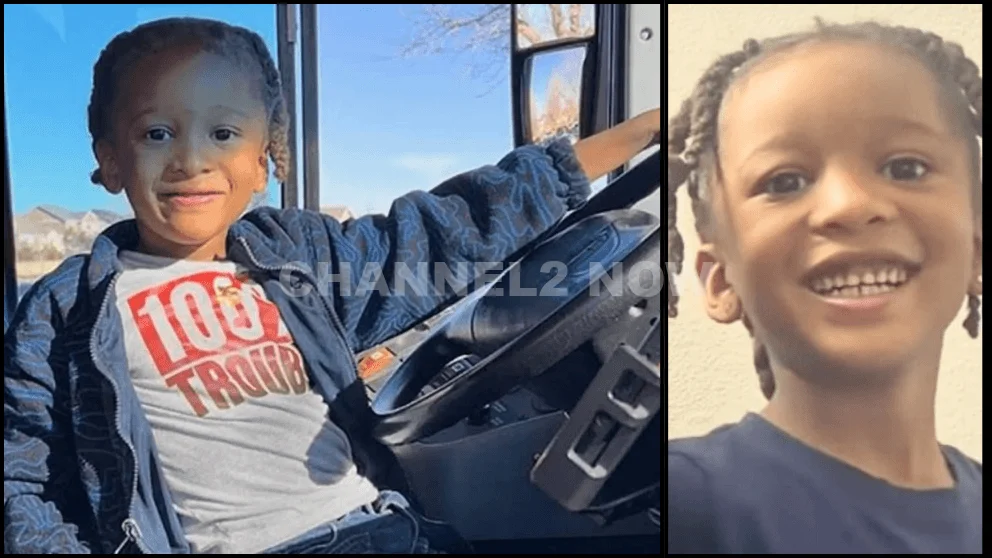
The Centennial Community Shattered by Sibling Tragedy
The suburban landscape of Centennial, Colorado, and the broader Denver metropolitan area are grappling with a narrative that defies easy explanation or comfort. On Tuesday, April 7, 2026, the 18th Judicial District Attorney’s Office delivered a formal update that has sent shockwaves through the region: an 11-year-old boy has been officially charged with first-degree murder in the death of his younger brother, 5-year-old Elias Reliford.
This case represents one of the most complex intersections of law, psychology, and family grief in recent Colorado history. The incident, which occurred nearly a month ago, has evolved from a heartbreaking local emergency call into a legal landmark that will test the boundaries of the state’s juvenile justice system. As the community mourns the loss of a kindergartener known for his love of fire trucks and outdoor play, they are simultaneously forced to confront the reality of a child suspect who, at just 11 years old, faces the most serious charge in the criminal code.
The Charges and the Role of the 18th Judicial District
The formal charging document filed by the 18th Judicial District Attorney’s Office is not merely a procedural step; it is a declaration of the severity with which the state views the incident that occurred on March 10. The 11-year-old suspect is charged with first-degree murder, but the prosecution has taken the additional step of filing an aggravated juvenile offender sentence enhancer.
Understanding the Sentence Enhancer
In Colorado’s legal framework, an “aggravated juvenile offender” designation is reserved for cases involving particularly heinous acts or specific criteria that allow for more stringent supervision and longer-term detention within the juvenile system. For an 11-year-old, this enhancer signals that the District Attorney believes the circumstances of Elias Reliford’s death warrant the maximum possible intervention allowed under the law for a pre-teen.
The Legal Rareness of the Case
Legal scholars and defense attorneys across Colorado have noted that charging an 11-year-old with first-degree murder is an “exceedingly rare” event. Under current state statutes, the age of the defendant is a hard barrier against adult prosecution. Because the suspect was under the age of 12 at the time of the alleged crime, he cannot be “charged as an adult” or transferred to criminal court, regardless of the gravity of the offense. This keeps the proceedings strictly within the confidential and rehabilitative-focused confines of juvenile court.
The Victim: Remembering the Life of Elias Reliford
Amidst the legal filings and the logistical details of the investigation, the heart of the story remains the loss of Elias Reliford. A 5-year-old kindergartener, Elias was described by those who knew him as the embodiment of childhood joy and energy.
A Life Defined by Play and Affection
Elias was a child who found wonder in the everyday. His relatives recall a boy who was “energetic and affectionate,” a child who would jump at the chance to play a harmless prank or head outside for an adventure. His fascination with fire trucks was a defining trait, often seen playing with toy versions or pointing them out with excitement whenever one passed with sirens blaring.
The Kindergarten Experience
As a student, Elias was just beginning his educational journey. His teachers and classmates at his local Denver-area school remember a boy who brought a light to the classroom. The transition from school to home was a daily routine that Elias looked forward to, particularly because it meant reuniting with his older brother. The tragedy of his passing is compounded by the fact that he was at an age where his personality was just beginning to fully bloom, leaving his family with a lifetime of “what ifs.”
The Family Perspective: Dawn Myles and the Bond Between Brothers
Perhaps the most haunting aspect of this case is the relationship between the victim and the accused. Speaking on behalf of the family, Dawn Myles, the great-aunt of both boys, shared a perspective that paints a picture of two siblings who were fundamentally inseparable.
“If you saw one brother, you saw the other,” Dawn Myles stated, her voice heavy with the weight of a dual tragedy.
The Myth of Sibling Rivalry
In many cases of sibling violence, investigators look for long-standing animosity or a history of conflict. However, Dawn Myles’ testimony suggests the opposite. She described the two as being exceptionally close, noting that they were rarely seen apart and that their bond was a source of pride for the family. This detail makes the events of March 10 even more incomprehensible for the Reliford family. They are not only mourning the death of Elias but are also losing a second child to the juvenile justice system, all while trying to reconcile the “affectionate” brother they knew with the charges now being brought by the state.
The Family’s Grief and Disbelief
For the parents and extended relatives, the grief is multifaceted. There is the immediate trauma of losing a 5-year-old, the shock of the 11-year-old’s involvement, and the public scrutiny that follows a murder charge in a suburban community like Centennial. Dawn Myles has become the voice of a family caught in a nightmare, emphasizing that the boys were each other’s best friends right up until the moment everything changed.
The Incident Timeline: March 10, 2026
The events that led to the death of Elias Reliford began as a typical, mundane afternoon. According to the Arapahoe County Sheriff’s Office, the timeline suggests a tragic window of time where routine chores and a nap coincided with a fatal outburst.
A Routine Turned Fatal
On the afternoon of March 10, Elias had returned home from a normal day at school. As was common for a 5-year-old, he had gone down for a nap to rest. Meanwhile, his 11-year-old brother was reportedly tasked with completing household chores—a standard expectation for a child of his age in the Reliford household.
The Discovery
Deputies responded to the residence in the Denver metropolitan area following a call for medical assistance. Upon arrival, they discovered Elias deceased. The initial investigation quickly pivoted from a medical emergency to a criminal inquiry as the nature of the injuries became apparent. While the specific cause of death and the weapon used (if any) have not been released to the public to protect the integrity of the juvenile proceedings, the charges of first-degree murder indicate that the prosecution believes the act was both intentional and premeditated.
The Legal Landscape: Juvenile vs. Adult Prosecution
The charging of an 11-year-old brings the intricacies of Colorado Revised Statutes into sharp focus. The state has specific protections for young children, even those accused of the most violent crimes.
The Age 12 Threshold
In Colorado, the age of 12 is a significant legal meridian. A child must be at least 12 years old before a prosecutor can even request a transfer to adult court for certain “extraordinary risk” crimes. Because the suspect in this case is 11, he is legally shielded from the adult system. This means he will not face life in prison without parole or the death penalty (which is abolished in Colorado regardless).
Potential Sentencing: 3 to 7 Years
If the 11-year-old is convicted—or “adjudicated delinquent,” which is the juvenile equivalent—his sentence will be vastly different from an adult’s. Under the Youthful Offender System and juvenile guidelines, the maximum sentence for a child of this age is typically a commitment to the Division of Youth Services for a period of three to seven years.
This sentencing structure is designed with the philosophy that an 11-year-old’s brain is still developing and that rehabilitation is the primary goal of the state. However, for a community reeling from the death of a 5-year-old, this limited sentencing window often sparks intense debate about justice versus mercy.
Law Enforcement Perspective: Sheriff Tyler Brown’s Statement
The emotional toll of this case extends beyond the family to the first responders and investigators who handled the scene. Arapahoe County Sheriff Tyler Brown issued a statement that acknowledged the profound difficulty of the situation.
The Hardship for Investigators
Sheriff Tyler Brown noted that cases involving the homicide of children are among the “most difficult” that deputies and investigators face. For the officers who arrived on March 10, the scene was not just a crime scene; it was the site of a shattered family.
“Our hearts go out to the family and the community,” Sheriff Tyler Brown remarked, emphasizing the human element of the badge.
The Arapahoe County Sheriff’s Office has remained tight-lipped about the specific evidence collected, but they have confirmed that the 11-year-old was identified as the sole suspect following a thorough forensic and testimonial investigation. The Sheriff’s goal now is to ensure the 18th Judicial District has everything necessary to pursue the case while managing the community’s safety concerns.
The Detention: Marvin W. Foote Youth Services Center
The 11-year-old suspect is currently being held at the Marvin W. Foote Youth Services Center in Cherry Creek. This facility is a secure detention center designed specifically for juveniles awaiting court proceedings or serving short-term commitments.
Life Inside the Facility
Unlike an adult jail, the Foote Center focuses on education, mental health services, and structured activity. However, it remains a secure, locked facility. For an 11-year-old, being separated from his family and placed in a government institution is a jarring transition. He is likely receiving intensive psychological evaluations as the court attempts to understand his state of mind on March 10.
The Evaluation Process
One of the key components of the upcoming legal proceedings will be competency and mental health evaluations. Defense attorneys will likely explore whether the 11-year-old fully understood the finality of his actions. At that age, the concept of death and the legal consequences of violence are often processed differently than they are by adults or even older teenagers.
Psychological Insights into Sibling Violence
The death of Elias Reliford at the hands of his brother falls into a rare and tragic category known as fratricide. Psychologists who study juvenile violence often look for “red flags” such as a history of trauma, neurodevelopmental issues, or extreme jealousy.
The “Sudden Snap” vs. Chronic Issues
In the case of the Reliford brothers, the description provided by Dawn Myles—that they were “exceptionally close”—makes the psychological profile even more puzzling. When there is no documented history of abuse or rivalry, experts often look toward:
-
Impulse Control: The inability of a child’s developing brain to manage sudden, intense anger.
-
Environmental Stressors: Sudden changes in the home or school environment.
-
Cognitive Development: Whether the child viewed the violence as “real” or influenced by media and gaming.
The “aggravated juvenile offender” enhancer suggests that the prosecution believes there is more to the story than a simple lack of impulse control, pointing toward a need for long-term psychological intervention.
Community Impact and Support in Centennial
Centennial is a community known for its parks, schools, and family-oriented neighborhoods. The death of Elias Reliford has left a void in the local fabric.
Vigils and Memorials
In the weeks since March 10, small memorials have appeared near the family home and Elias’s school. Toy fire trucks, blue ribbons, and handwritten notes from other kindergarteners serve as a testament to the boy’s impact. The community is not only grieving Elias but is also struggling with how to support a family that is simultaneously the victim and the family of the accused.
Support for the Family
Neighbors have organized meal trains and support groups for the parents. The complexity of the case makes it difficult for some to know what to say, but the prevailing sentiment in Arapahoe County is one of deep sympathy for a family facing an impossible journey through the justice system.
The Road Ahead: Future Legal Proceedings
As the investigation remains “ongoing,” the next steps for the 11-year-old suspect involve a series of juvenile court hearings.
The Discovery Phase
The 18th Judicial District Attorney’s Office will continue to process digital evidence, witness statements, and forensic reports. Because of the “aggravated” enhancer, the prosecution will likely bring in expert witnesses to testify about the nature of the crime and the necessity of high-level detention.
The Defense Strategy
The defense will likely focus on the child’s age and capacity. They will aim to keep the focus on rehabilitation rather than punishment, arguing that an 11-year-old is a “work in progress” who can be saved through intensive therapy rather than just incarceration.
Final Reflections
The story of Elias Reliford and his brother is a tragedy with no winners. It is a case that has forced Sheriff Tyler Brown and Dawn Myles into the national spotlight, highlighting a nightmare that every parent hopes to never imagine. As Centennial moves forward, the focus remains on seeking a form of justice that acknowledges the life of a 5-year-old boy who loved fire trucks, while grappling with the reality of an 11-year-old whose life has been forever altered by a single, fatal afternoon in March.
Case Summary & Key Facts
-
Victim: Elias Reliford, 5 years old.
-
Suspect: 11-year-old brother (unnamed).
-
Date of Incident: March 10, 2026.
-
Date of Charges: April 7, 2026.
-
Charges: First-degree murder with an aggravated juvenile offender sentence enhancer.
-
Jurisdiction: 18th Judicial District (Arapahoe County).
-
Maximum Potential Sentence: 3 to 7 years in the Youthful Offender System.
-
Key Witnesses/Speakers: Dawn Myles (Great-Aunt), Tyler Brown (Arapahoe County Sheriff).
Leave a Reply